OWARDS SUSTAINABLE
AND RESILIENT FOOD SYSTEMS
IN SOMALIA
Somalia’s food systems hold the key to the country’s economic
and social development. The way food is produced, processed,
transported, traded, distributed, consumed and disposed of,
brings forth an array of opportunity for prosperity within the
country. However, for this revolution to occur the food system
needs to be transformed in its capacity to be sustainable, resilient
and support healthy diets.
Youth engagement in food systems:
Digital Revolution and Innovation in Food Systems
Shocks and Social Protection Impacts on Food Systems:
Climate Change, Disaster Risk Reduction and Food Systems:
Lorem ipsum is simply free text available. Aenean eu leo quam. Pellentesque ornare sem lacinia quam venenatis vestibulum. Aenean lacinia bibendum.
Jessica Brown
Customer
Caleb Hoffman
Customer
Bradley Kim
Customer
Testimonials
This is due to their excellent service, competitive pricing and customer support. It’s throughly refresing to get such a personal touch. Duis aute lorem ipsum is simply free text irure dolor in reprehenderit in esse nulla pariatur.
This is due to their excellent service, competitive pricing and customer support. It’s throughly refresing to get such a personal touch. Duis aute lorem ipsum is simply free text irure dolor in reprehenderit in esse nulla pariatur.
This is due to their excellent service, competitive pricing and customer support. It’s throughly refresing to get such a personal touch. Duis aute lorem ipsum is simply free text irure dolor in reprehenderit in esse nulla pariatur.
Jessica Brown
Customer
Caleb Hoffman
Customer
Bradley Kim
Customer
The Somali
government acknowledges that food insecurity is also major contributor to conflict in the country and therefore
advancements in the food system, and urgent action is needed to ensure that the food systems are able to
support the food needs in Somalia.
Total government revenue as a proportion of GDP increased from 3.9 per cent in 2018 to
4 per cent in 2019 however, statistics show that 70% of the population lives under
the poverty line with 40% in extreme poverty. In addition to this, approximately
half of female-headed households are living below the poverty line. One
in every five Somali household depends on overseas remittances. It is
anticipated that the impacts of COVID-19 may lead to a worsening
situation among the vulnerable groups including those in urban centers
and IDPs. A majority of the Somali population 65% are under the age
of 35. Accelerating economic growth and increasing employment
opportunities, particularly for young people, has been a priority for
the FGS and as such is reflected in the NDP-9. However, the
food system is not able to provide decent livelihood
opportunities for the growing workforce.
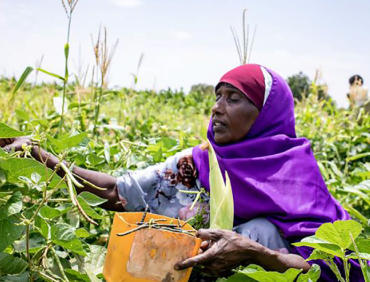
Reports indicate that one-quarter to one-
third of Somali households are headed by
a woman and they generate up to 70% of
household income. Gender equality is not
only a fundamental human right, but a
prerequisite for a peaceful, prosperous and
sustainable Somalia.
TOWARDS SUSTAINABLE
AND RESILIENT FOOD SYSTEMS
IN SOMALIA
MINISTRY OF AGRICULTURE AND IRRIGATION
Get to know us
What is at stake?
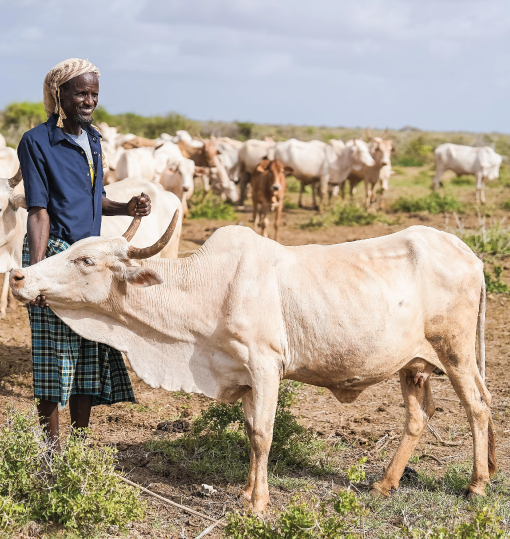
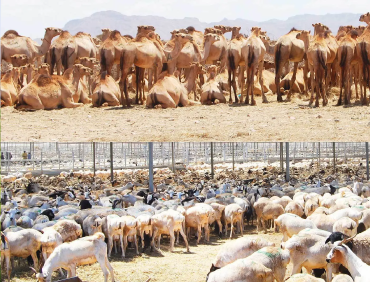
The food system faces an array of challenges in its potential to feed the growing population. Agriculture (crop
production, livestock and fisheries) is an important source of livelihoods and employment in Somalia, representing
72 percent of employment in 2019. High rates of malnutrition with one in four people facing high levels of food
insecurity and approximately 800 000 children under five at risk of acute malnutrition poses a great challenge
for the country. The low levels of food production and productivity (in crop production, livestock and fisheries)
has led to an increased dependency on humanitarian assistance as well as 60% of food imports.
We’re popular leader in agriculture market globally